While China has been reluctant to tackle its domestic coal emissions in the short term, this statement is a recognition of the urgency of action.
So the joint steps agreed - on methane, forests and technology transfer - are important symbolically and also potentially in emissions terms.
The agreement is also a recognition by both sides that there is a massive gap between the efforts of countries to limit emissions to date, and what science says is necessary for a safer world.
Closing that gap means a strong agreement here in Glasgow.
The optics and timing of this statement, regardless of the contents, certainly give that a boost.
Greenpeace International Executive Director Jennifer Morgan welcomed the declaration between China and the US, but warned that both countries needed to show greater commitment to reaching climate goals.
"Ultimately their statement falls short of the call by the climate vulnerable countries demanding that nations come back to the table every year with greater ambition until the 1.5C gap is closed", she said.
EU climate policy chief Frans Timmermans said it was "really encouraging" to see China and the US working together. "It shows also that the US and China know this subject transcends other issues. And it certainly helps us here at COP to come to an agreement", he added.
UN Secretary General Antonio Guterres said the announcement was "an important step in the right direction."
COP26 is the biggest climate change conference since landmark talks in Paris in 2015. Some 200 countries are being asked for their plans to cut greenhouse gas emissions, which cause global warming, by 2030.

In other developments at the COP26 climate summit today:
Last week, US President Joe Biden criticised Chinese President Xi Jinping for not turning up to the summit in person.
"The fact that China is trying to assert, understandably, a new role in the world as a world leader - not showing up, come on," Mr Biden said, adding that Xi Jinping's absence was a "big mistake".
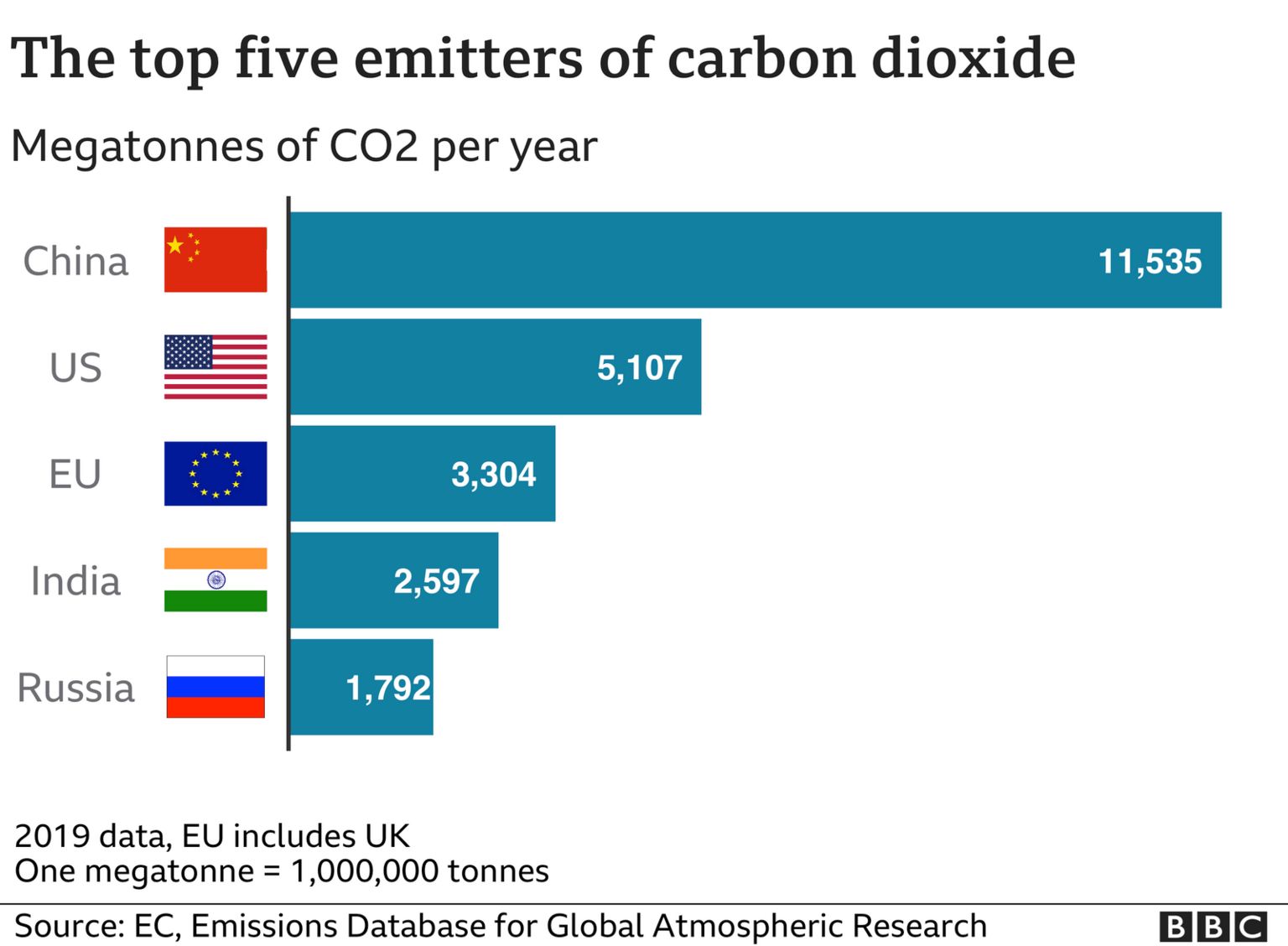
China is the world's largest emitter of carbon dioxide, followed by the US. In September Mr Xi announced that China will aim for carbon neutrality by 2060, with a plan to hit peak emissions before 2030. The US is aiming for net-zero by 2050.